
|
||||||||||
|
||||||||||
|
|
|
|
|
|
|
|||||||||||
|
|
|
Wasted decade Human Rights Watch
After Bashar al-Asad
succeeded his father as president in July 2000, many people in Syria
hoped that the human rights situation would improve. In his first
inaugural speech on July 17, al-Asad spoke of the need for “creative
thinking,” “the desperate need for constructive criticism,”
“transparency,” and “democracy.”
----------------------------------------------------------
Stateless Kurds
in Syria - Illegal invaders or victims of a nationalistic policy?
With Decree No. 93 on August 23, 1962, the Syrian government ordered a special census for al-Hasakah province, which was carried out on October 5, 1962. As a result, approximately 120,000 Kurds lost their Syrian citizenship and with it, their basic civil rights. Since the descendants of these people registered as stateless (ajanib, sing. ajnabi/ajnabiyah, literally »foreigners«) are likewise stateless, the number of those affected has continued to rise over the last decades.
To read the full report in English please click here PDF Or directly on the KurdWatch website here
----------------------------------------------------------
YASA shadow
report for the review of the Syrian Arab Republic under the UN
convention against torture (CAT) A new strategy against the Kurds in Syria is torturing the Kurdish soldiers in the Syrian army, but as access to army documents is a national secret, human rights organisation are not able to prove any human rights violation and torture inside the army. During the last 5 years, 35 Kurdish Soldiers have been killed during their time of military service in Syria. The parents were unclearly informed about the death of their sons. Nevertheless, parents had to confirm the vague information and unclear statements they had received in order to get the dead bodies.
To read the full report in English please click here PDF
To read the reports
of the other organisations please click
here
------------------------------------------------------- Rheinische Friedrich- Wilhelms University Bonn, the Institute for Orient and Asia sciences - Islam Sciences department in cooperation with YASA e.V. Kurdish Centre for legal Studies & Consultancy and the Kurdish students group RAMAN
Offer a training course for teachers for Kurdish (Kurmanji) The objective of this course is to train people who have very good Kurdish skills and would like to teach Kurdish and would like to improve their teaching skills in Kurdish.
Participants will be trained to teach Kurdish to students and pupils in the German schools and universities.
The course offers also the possibility to improve their Kurdish skills in six months throw online materials which are prepared from experts in the Kurdish language.
At the end of the course participants will have a written and oral examination. Successful participants will receive a certificate of successful participation to Kurdish as foreign language. The certificate proves the skills of teaching Kurdish at schools and universities.
For further information about the course and it objectives, registration, fees and terms & condition please refer to the following link: http://www.ioa.uni-bonn.de/abteilungen/islamwissenschaft/sommerkurse or under http://www.raman.uni-bonn.de/deutsch/event_25.htm --------------------------------------------------------------------- Group Denial -
Repression of Kurdish Political and Cultural Rights in Syria Human Rights
Watch urge the governments of the European Union and the USA to
communicate their strong disapproval of Syria’s treatment of its
Kurdish minority and to emphasize that further progress in their
relations with Syria will depend on concrete improvements in Syria’s
human rights situation. ------------------------------------------------------------------ Forum on
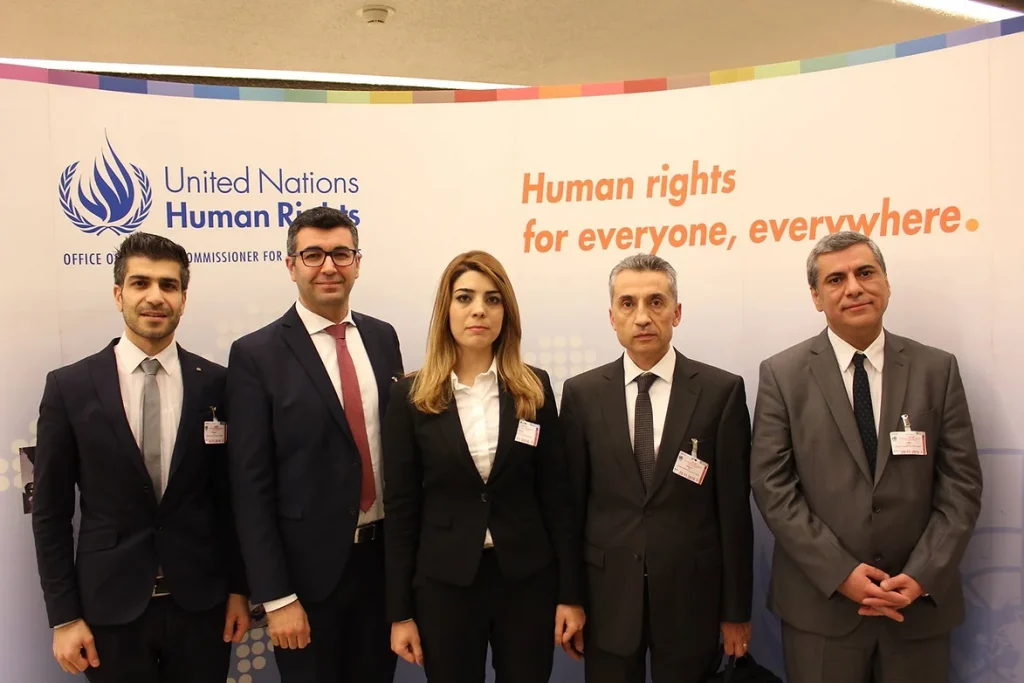
Minority Issues in Geneva -------------------------------------------------------------------- The Festival of Kurdish Poetry On 24 October 2009 YASA e.V. - Kurdish Centre for Legal Studies and Consultancy and the committee of the Festival organizes in Bonn the Festival of Kurdish Poetry outside the homland to listen to poems in Kurdish and German language. From 14:00 to 19:00 in König Str.: 88 - 53115 Bonn. ---------------------------------------------------------------------
Current situation of the Kurds in
Syria -------------------------------------------------------------------- The situation of the Kurdish asylum seekers,
and the German-Syrian agreement
----------------------------------------------------------------------------
Workshop on
Human Rights and the Politics
The Kurds in Syria: Fueling Separatist Movements in the Region? -Kurds in Syria have been denied basic social, cultural, and political rights, in many cases stemming from the Syrian state’s refusal to grant citizenship. -Kurdish political opposition in Syria is fractured. Though some join Kurds in other countries in calling for the emergence of a separate Kurdish state, many Kurds reject separatism and have generally been committed to peaceful democratic struggle. -Democratic reforms in Syria that improve the human rights situation for Kurds and non-Kurds could go a long way to alleviate the tension between the Kurds and the Syrian state. -The problems that Syrian Kurds face cannot be truly solved without an effort both to improve the human rights of Kurds throughout the region and to foster their political inclusion in their states of residency. -The United States and European Union should use any diplomatic tools at their disposal to promote appropriate reforms in Syria and the region. To read the Full report please click here
------------------------------------------------------------------
This book is a decisive contribution to the study of Kurdish history in Syria since the mandatory period (1920-1946) up to nowadays. Avoiding an essentialist approach, Jordi Tejel provides fine, complex and sometimes paradoxical analysis about the articulation between tribal, local, regional, and national identities, on one hand, and the formation of a Kurdish minority awareness vis-à-vis the consolidation of Arab nationalism in Syria, on the other hand. Using unpublished material, in particular concerning the Mandatory period (French records and Kurdish newspapers) and social movement theory, Tejel analyses the reasons of this "exception" within the Kurdish political sphere. In spite of the exclusion of Kurdishness from the public sphere, especially since 1963, Kurds of Syria have avoided a direct confrontation with the central power, most Kurds opting for a strategy of "dissimulation", cultivating internally the forms of identity that challenge the official ideology. The book explores the dynamics leading to the consolidation of Kurdish minority awareness in contemporary Syria; an ongoing process that could take the form of radicalization or even violence. To read the first 30 pages please click here To buy the book please click here ------------------------------------------------------------------
Forum on
Minority Issues in Geneva
|
|||||||||||
|
|
|
Copyright © 2005 - 2009 YASA, All rights reserved. |